
AI Test Automation Tools are transforming the way companies build, test, and deliver software. As applications become more complex, traditional testing methods often struggle to maintain speed and accuracy. Modern solutions use Artificial Intelligence, Machine Learning, and smart automation techniques to identify issues faster and improve software quality. These tools help teams create reliable tests, reduce manual effort, and accelerate development cycles. With advanced Ai Automaiton, businesses can achieve smarter testing workflows and better coverage. From startups to large enterprises, organizations are adopting these platforms to create efficient quality processes and deliver better digital experiences with confidence.
Quick Comparison Table (Top Picks at a Glance)
Choosing the right automation platform can be difficult because every tool offers different capabilities. Some platforms focus on self-healing tests, while others specialize in visual testing, no-code workflows, or enterprise-level automation.
The following table provides a quick overview of the best AI Test Automation Tools for 2026..
| Tool | Best For | AI Features | Pricing | Free Trial | Rating |
| Testim | Best overall AI testing platform | AI element recognition, self-healing tests | Custom pricing | Yes | 4.8/5 |
| Mabl | Agile development teams | AI insights, automated regression testing | Subscription | Yes | 4.7/5 |
| Functionize | Enterprise testing | Autonomous testing, AI-generated tests | Custom pricing | Yes | 4.6/5 |
| Tricentis Tosca | Large organizations | Intelligent automation, model-based testing | Custom pricing | Limited | 4.6/5 |
| Katalon Studio | Beginners and growing teams | AI assistance, analytics | Free and paid plans | Yes | 4.5/5 |
| Selenium + AI Extensions | Open-source users | AI-enhanced browser automation | Free | Yes | 4.5/5 |
| Applitools | Visual testing | Computer vision AI | Paid plans | Yes | 4.7/5 |
| ACCELQ | No-code automation | AI maintenance and workflows | Subscription | Yes | 4.5/5 |
| Testsigma | Natural language testing | AI test creation | Subscription | Yes | 4.5/5 |
| Leapwork | Business process automation | Visual automation workflows | Custom pricing | Yes | 4.4/5 |
| Sauce Labs AI Testing | Cloud testing teams | AI analytics and testing intelligence | Subscription | Yes | 4.4/5 |
| AI Agent Testing Platforms | Future-focused teams | Autonomous AI Agents | Varies | Varies | 4.3/5 |
The right AI Test Automation Tools depend on your team size, technical skills, budget, and testing requirements. A startup may prefer a simple no-code solution, while a global enterprise may need advanced security and scalability.
What Are AI Test Automation Tools?
AI Test Automation Tools are software solutions that use Artificial Intelligence to improve the software testing process.. Unlike traditional automation systems, these platforms can analyze information, recognize patterns, and make intelligent decisions.
Traditional automation follows fixed instructions. It performs actions exactly as programmed. If something changes, the script usually requires manual updates.
AI-based automation works differently. It can understand application behavior and adjust based on new information.
These platforms often combine several advanced technologies, including Machine Learning, Natural Language Processing, Generative AI, and Large Language Model (LLM) systems.
Together, these technologies allow testing platforms to become more adaptive.
A modern AI workflow platform can help teams automate complex testing processes. It can connect different systems, analyze results, and recommend improvements. This creates a smarter approach called AI process automation.
Businesses are also combining testing automation with broader business automation tools to improve operations beyond software quality.
AI vs Rule-Based Automation
Rule-based automation works like a strict checklist. It follows instructions but cannot understand context.
AI-powered automation introduces intelligence.
A rule-based system may ask:
“Is this button located at this exact position?”
An AI system asks:
“Is this the same button performing the same function?”
That difference creates a more human-like testing experience.
The technologies behind modern AI testing include:
| Technology | Role in Testing |
| Artificial Intelligence | Enables intelligent decision-making |
| Machine Learning | Learns from previous testing data |
| Natural Language Processing | Understands human language instructions |
| Generative AI | Creates testing scenarios and suggestions |
| Large Language Model (LLM) | Understands requirements and generates content |
| GPT | Helps create intelligent responses and automation ideas |
| Claude | Supports advanced AI reasoning workflows |
Some advanced systems also use AI Agent technology. These agents can perform independent actions, analyze results, and suggest improvements.
Future testing systems may combine AI Orchestration, Prompt Engineering, Retrieval-Augmented Generation (RAG), and Model Context Protocol (MCP) to create highly connected automation environments.
How AI Improves QA Testing
AI improves quality assurance by making testing faster, smarter, and more reliable.
One major improvement is automated test creation. Instead of manually writing every scenario, AI can analyze requirements and suggest possible tests.
Another important improvement is self-healing automation. When software changes, AI can detect the change and update the testing workflow.
This reduces maintenance time.
The table below shows how AI improves QA processes.
| AI Capability | Testing Benefit |
| Self-healing tests | Reduces broken automation scripts |
| AI-generated test cases | Expands testing coverage |
| Predictive analytics | Finds risky areas earlier |
| Visual AI testing | Detects interface problems |
| Smart reporting | Explains failures clearly |
A practical example is a banking application.
A bank may have thousands of customer actions, including login, payments, transfers, and account management. Testing every possible scenario manually would require enormous effort.
An AI-powered testing system can analyze customer workflows and identify important test cases automatically.
This creates better software quality while reducing testing delays.
How We Tested & Ranked These AI Testing Tools
Choosing the best AI Test Automation Tools requires more than reviewing marketing claims. Many platforms advertise AI capabilities, but real performance depends on practical results.
For this comparison, we evaluated each tool using important factors that influence real-world adoption.
The goal was to identify tools that provide strong automation, reliable performance, and long-term value.
Testing Criteria
We ranked each tool using the following criteria:
| Category | Evaluation Focus |
| AI Capabilities | Intelligence, automation, learning features |
| Ease of Use | User experience and learning curve |
| Integrations | Compatibility with development tools |
| Performance | Speed, stability, and accuracy |
| Pricing | Value compared with features |
| Support | Documentation and customer assistance |
Ease of Use
A powerful automation platform should not require weeks of training.
We analyzed how quickly teams can create tests, manage workflows, and understand results.
Modern teams increasingly prefer workflow automation software that allows both technical and non-technical users to participate.
No-code and low-code features are becoming especially important because they allow business teams and QA professionals to create automation without advanced programming skills.
AI Capabilities
AI features were one of the most important ranking factors.
We examined:
- AI-generated tests.
- Self-healing workflows.
- Intelligent recommendations.
- Predictive analysis.
- Autonomous testing features.
The best platforms use AI as more than a simple assistant. They use it as an intelligent partner that helps teams make better decisions.
Integrations
Modern software teams use multiple tools together.
A strong automation platform should connect easily with existing systems.
We evaluated support for:
| Integration | Purpose |
| Selenium | Browser automation |
| Playwright | Modern web testing |
| Cypress | Front-end testing |
| Jenkins | Continuous integration |
| GitHub Actions | Automated deployment workflows |
| Jira | Issue management |
| Azure DevOps | Enterprise development |
Strong integrations make automation easier to manage.
Performance
Speed alone does not define a good testing tool. Accuracy and reliability are equally important.
We considered:
- Test execution speed.
- Stability.
- Error detection.
- Large-scale testing support.
- Reporting quality.
Reliable tools help teams release software with confidence.
Pricing
Pricing plays a major role in tool selection.
Small companies usually need affordable solutions. Large enterprises often require advanced security, compliance, and support.
We compared:
- Free plans.
- Trial availability.
- Subscription models.
- Enterprise packages.
The best tools provide long-term value by reducing maintenance costs and improving productivity.
Support
Good customer support helps teams succeed.
We reviewed:
- Documentation quality.
- Learning resources.
- Community support.
- Enterprise assistance.
A strong support system reduces adoption challenges.
12 Best AI Test Automation Tools
The following AI Test Automation Tools represent some of the strongest automation software options available in 2026. Each platform has different strengths, so the best choice depends on your goals.
Testim — Best Overall AI Test Automation Tool
Overview
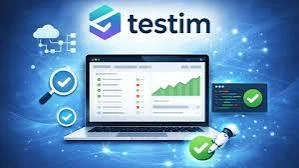
Testim is one of the most recognized AI automation software platforms for modern application testing.
It focuses on creating stable automated tests that require less maintenance.
The platform uses AI-based element recognition to understand application components. This helps reduce failures caused by small interface changes.
Testim is especially popular among teams that need reliable web application testing.
Key Features
Testim provides:
| Feature | Description |
| AI element recognition | Identifies application components intelligently |
| Self-healing tests | Repairs certain broken workflows |
| Low-code creation | Helps teams build tests faster |
| Test management | Organizes automation workflows |
Pros
Testim reduces repetitive maintenance work. It helps teams create tests quickly and supports collaboration between developers and QA professionals.
Cons
The platform may become expensive for smaller teams. Some advanced features require higher-level plans.
Pricing
Testim generally follows a subscription-based pricing model. Enterprise customers usually receive customized packages.
Best For
Testim is best suited for:
- SaaS companies.
- Enterprise QA teams.
- Agile development organizations.
Overall Rating
★★★★★ 4.8/5
Mabl — Best AI Testing Tool for Agile Teams
Overview
Mabl is an AI-powered testing platform designed for teams practicing continuous delivery. It helps developers and testers create reliable automated tests without heavy coding requirements.
The platform focuses on speed, collaboration, and continuous quality improvement.
Key Features
| Feature | Description |
| AI test creation | Generates testing workflows faster |
| Automated regression testing | Checks application changes continuously |
| Cloud testing | Runs tests at scale |
| Intelligent insights | Provides useful testing recommendations |
Pros
Mabl has an easy learning curve. It works well for agile teams that need faster feedback during development.
Cons
Large enterprises with highly complex requirements may need more advanced customization.
Pricing
Mabl uses subscription-based pricing. Enterprise plans usually include additional features and support.
Best For
Mabl works well for:
- Agile software teams.
- SaaS companies.
- Continuous testing environments.
Overall Rating
★★★★★ 4.7/5
Functionize — Best Enterprise AI Testing Platform
Overview
Functionize is a powerful AI test automation tool designed for organizations that need large-scale software testing. It uses Artificial Intelligence, Machine Learning, and advanced analytics to create and maintain automated tests.
Unlike traditional automation systems that depend heavily on fixed scripts, Functionize focuses on intelligent testing. It can understand application behavior, analyze failures, and improve testing workflows over time.
Large companies often choose platforms like Functionize because they need reliable enterprise automation across multiple applications, teams, and environments.
For example, a global financial company may have hundreds of applications running across different regions. Managing every test manually becomes extremely difficult. Functionize helps such organizations build a centralized testing process using AI-powered automation.
Key Features
| Feature | Description |
| AI test generation | Creates automated tests using intelligent analysis |
| Autonomous testing | Performs testing workflows with less manual effort |
| Natural language testing | Allows users to describe tests in simple language |
| Cloud execution | Supports large-scale testing environments |
| Smart failure analysis | Helps identify reasons behind failures |
Pros
Functionize provides strong scalability for enterprise teams. Its AI capabilities reduce repetitive testing work and help organizations manage complex applications.
The platform also supports teams that want to move toward smarter AI workflow automation instead of relying only on traditional scripts.
Cons
Functionize may feel expensive for small businesses. New users may also need time to understand its advanced features.
Pricing
Functionize uses customized enterprise pricing. Costs depend on team size, testing requirements, and selected features.
Best For
Functionize is best for:
| Business Type | Reason |
| Large enterprises | Handles complex testing environments |
| Global companies | Supports scalable workflows |
| QA departments | Reduces manual testing effort |
Overall Rating
★★★★★ 4.6/5
Tricentis Tosca — Best Enterprise AI Automation Solution
Overview
Tricentis Tosca is one of the leading AI Test Automation Tools designed for organizations that need comprehensive automation across complex software environments..
The platform combines intelligent automation with model-based testing. It helps teams test web applications, APIs, mobile applications, and enterprise systems.
Many large organizations use Tosca because it supports structured testing processes and advanced quality management.
The platform fits well with companies that require workflow orchestration, compliance support, and large-scale digital transformation.

Key Features
| Feature | Description |
| Model-based testing | Creates reusable testing models |
| Risk-based testing | Prioritizes important test areas |
| API testing | Supports backend validation |
| Enterprise scalability | Works across large organizations |
| Intelligent automation | Reduces repetitive tasks |
Pros
Tosca provides strong enterprise capabilities. Among modern AI Test Automation Tools, Tosca stands out for enterprise scalability and model-based testing. It supports complex environments and helps organizations standardize testing processes.
It is especially useful for companies adopting digital automation strategies across departments.
Cons
The platform can be complex for beginners. Smaller teams may find the pricing and learning requirements challenging.
Pricing
Tricentis Tosca follows enterprise pricing. Packages depend on company size and requirements.
Best For
Tosca is suitable for:
- Enterprise organizations.
- Banking and finance companies.
- Large software teams.
Overall Rating
★★★★★ 4.6/5
Katalon Studio — Best AI Testing Tool for Beginners
Overview
Katalon Studio is one of the most beginner-friendly AI Test Automation Tools for developers and growing QA teams.
It provides an easier way to create automated tests without requiring advanced programming knowledge.
The platform supports web, mobile, API, and desktop testing. It combines traditional automation features with AI-assisted capabilities.
For companies starting their automation journey, Katalon provides a practical balance between simplicity and functionality.
Key Features
| Feature | Description |
| Low-code testing | Simplifies automation creation |
| Web testing | Supports browser automation |
| API testing | Validates backend systems |
| Mobile testing | Tests mobile applications |
| Reporting | Provides testing insights |
Pros
Katalon is easy to learn and works well for teams with different technical skill levels.
It is a strong option for companies looking for affordable AI business automation solutions.
Cons
Advanced enterprise users may require more customization options.
Pricing
Katalon offers free and paid plans. Premium features are available through subscription packages.
Best For
Katalon is ideal for:
- Beginners.
- Small businesses.
- Growing QA teams.
Overall Rating
★★★★☆ 4.5/5
Selenium with AI Enhancements — Best Open Source AI Testing Option
Overview
Selenium remains one of the most widely used automation frameworks in software testing.
Many organizations combine Selenium with AI Test Automation Tools to build smarter and more reliable testing workflows.
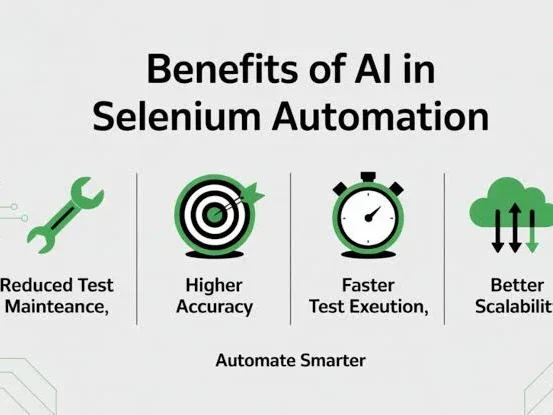
Although Selenium itself is not an AI platform, developers increasingly combine it with AI technologies to create smarter testing workflows.
By adding AI capabilities, teams can improve element recognition, test generation, and maintenance.
This combination provides a flexible option for organizations that want open-source automation.
Key Features
| Feature | Description |
| Open-source framework | Free and highly customizable |
| Browser automation | Supports major browsers |
| Large community | Extensive developer support |
| AI extensions | Adds intelligent capabilities |
Pros
Selenium provides maximum flexibility. Developers can customize workflows and integrate it with many technologies.
It is valuable for teams that want control over their automation environment.
Cons
Selenium requires more technical knowledge compared with no-code platforms.
AI capabilities usually require additional tools and configuration.
Pricing
Selenium is free because it is open source.
Best For
Best suited for:
- Developers.
- Technical QA teams.
- Open-source-focused organizations.
Overall Rating
★★★★☆ 4.5/5
Applitools — Best AI Visual Testing Platform
Overview
Applitools is one of the leading AI Test Automation Tools for visual testing using advanced Computer Vision AI technology.
Traditional functional testing checks whether software works. Visual AI testing checks whether software looks correct.
This is important because users judge applications based on appearance and experience.
For example, a website may technically function but display broken layouts on certain devices. Applitools can detect these visual differences automatically.
Key Features
| Feature | Description |
| Visual AI testing | Detects interface differences |
| Cross-browser testing | Checks multiple environments |
| Smart comparison | Identifies meaningful changes |
| Automated reporting | Explains visual issues |
Pros
Applitools is extremely effective for user interface quality. It helps teams maintain consistent digital experiences.
Cons
It focuses mainly on visual testing rather than complete automation coverage.
Pricing
Applitools offers paid subscription plans with enterprise options.
Best For
Ideal for:
- Web applications.
- Customer-facing products.
- Large UI teams.
Overall Rating
★★★★★ 4.7/5
ACCELQ — Best No-Code AI Automation Tool
Overview
ACCELQ is one of the most innovative AI Test Automation Tools focused on codeless testing and continuous quality.
It allows teams to create automated workflows without writing large amounts of code.
The platform supports web, API, mobile, and enterprise applications.
Key Features
| Feature | Description |
| No-code automation | Creates tests visually |
| AI maintenance | Reduces script updates |
| API testing | Supports backend validation |
| Cloud platform | Enables scalable automation |
Pros
ACCELQ helps non-developers participate in automation. It supports fast adoption across business teams.
Cons
Advanced customization may require technical knowledge.
Pricing
ACCELQ provides subscription-based pricing.
Best For
Suitable for:
- Business teams.
- QA departments.
- Companies adopting no-code automation.
Overall Rating
★★★★☆ 4.5/5
Testsigma — Best Natural Language AI Testing Platform
Overview
Testsigma is among the most user-friendly AI Test Automation Tools that simplify automation through natural language testing.
The platform allows users to describe testing requirements in everyday language.
This approach uses Natural Language Processing to convert instructions into automated workflows.
Key Features
| Feature | Description |
| AI test creation | Generates automation scenarios |
| Natural language support | Creates tests without complex coding |
| Mobile testing | Supports mobile applications |
| Cloud execution | Runs tests at scale |
Pros
Testsigma is beginner-friendly and reduces the technical barrier for automation.
Cons
Complex enterprise requirements may need additional customization.
Pricing
Testsigma offers subscription plans with trial options.
Best For
Best for:
- Agile teams.
- Non-technical testers.
- Growing companies.
Overall Rating
★★★★☆ 4.5/5
Leapwork — Best Visual Workflow Automation Platform
Overview
Leapwork provides a visual automation environment where users create workflows through a drag-and-drop interface.
The platform supports testing and business process automation.
It is useful for organizations that want AI process automation without complex programming.
Key Features
| Feature | Description |
| Visual workflows | Builds automation through diagrams |
| Enterprise support | Handles large processes |
| Cross-platform testing | Supports multiple systems |
| Automation monitoring | Tracks workflow performance |
Pros
Leapwork is easy to understand and supports business users.
Cons
Advanced developers may prefer more coding flexibility.
Pricing
Pricing depends on business requirements.
Best For
Ideal for:
- Enterprises.
- Operations teams.
- Business automation projects.
Overall Rating
★★★★☆ 4.4/5
Sauce Labs AI Testing — Best Cloud AI Testing Solution
Overview
Sauce Labs is one of the trusted AI Test Automation Tools that provides cloud-based testing solutions for modern development teams.
The platform supports web and mobile testing at scale.
Its AI features help teams analyze results, improve workflows, and manage testing environments.
Key Features
| Feature | Description |
| Cloud testing | Runs tests remotely |
| Mobile testing | Supports applications across devices |
| AI insights | Provides testing intelligence |
| Analytics | Tracks quality trends |
Pros
Sauce Labs is strong for teams needing scalable cloud testing.
Cons
Pricing may be high for smaller companies.
Pricing
Subscription-based plans are available.
Best For
Suitable for:
- Large development teams.
- Mobile application companies.
- Cloud-first organizations.
Overall Rating
★★★★☆ 4.4/5
AI Agent Testing Platforms — Best Future AI Testing Approach
Overview
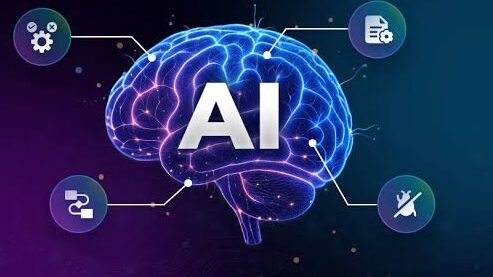
The next generation of AI Test Automation Tools is moving toward autonomous systems powered by AI Agents.
These platforms aim to create testing systems that can understand requirements, plan actions, execute tests, and analyze results independently.
Future AI Test Automation Tools may use Generative AI, Large Language Model (LLM) technology, and advanced AI Orchestration to create fully autonomous testing workflows.
Key Features
| Feature | Description |
| AI Agents | Autonomous testing assistants |
| AI Actions | Performs automated tasks |
| Smart reasoning | Understands complex requirements |
| Workflow orchestration | Connects multiple automation steps |
Pros
Future AI testing platforms may significantly reduce manual effort.
Cons
Many solutions are still developing. Accuracy and security remain important concerns.
Pricing
Pricing varies depending on platform maturity.
Best For
Best suited for:
- Innovation-focused companies.
- Research teams.
- Future-ready enterprises.
Overall Rating
★★★★☆ 4.3/5
Side-by-Side Feature Comparison: Best AI Test Automation Tools
Comparing AI Test Automation Tools side by side makes the decision process easier. Every organization has different needs. Some teams need open-source flexibility, while others require advanced enterprise automation features.
A startup may focus on affordability and simplicity. A global company may prioritize security, scalability, and advanced AI workflow automation capabilities.
The table below compares the top AI test automation tools based on important technical factors.
| Tool | AI Features | Selenium Support | Playwright Support | Cypress Support | Pricing | Free Trial |
| Testim | Self-healing tests, AI element recognition | Yes | Limited | Limited | Custom | Yes |
| Mabl | AI insights, automated regression | Yes | Yes | Yes | Subscription | Yes |
| Functionize | Autonomous testing, AI generation | Yes | Limited | Limited | Custom | Yes |
| Tricentis Tosca | Intelligent automation, model testing | Yes | Limited | Limited | Custom | Limited |
| Katalon Studio | AI assistance, analytics | Yes | Yes | Limited | Free/Paid | Yes |
| Selenium + AI Extensions | AI-enhanced automation | Yes | No | No | Free | Yes |
| Applitools | Visual AI testing | Yes | Yes | Yes | Paid | Yes |
| ACCELQ | AI maintenance, no-code automation | Yes | Limited | Limited | Subscription | Yes |
| Testsigma | NLP-based testing | Yes | Yes | Yes | Subscription | Yes |
| Leapwork | Visual automation | Limited | Limited | No | Custom | Yes |
| Sauce Labs | Cloud AI testing insights | Yes | Yes | Yes | Subscription | Yes |
| AI Agent Platforms | Autonomous workflows | Emerging | Emerging | Emerging | Varies | Varies |
This comparison shows that there is no single perfect AI Test Automation Tool for every team, and the best AI Test Automation Tools depend on your application type, development process, and automation goals. The best choice depends on your application type, development process, and automation goals.
Benefits of AI Test Automation
AI Test Automation Tools are becoming a major part of modern software development. Companies are moving away from repetitive manual processes and adopting smarter systems that improve speed and accuracy.
The biggest advantage of AI-powered automation is that it helps teams achieve more with fewer resources. Instead of spending hours maintaining scripts, testers can focus on improving product quality.
Modern AI automation software also connects with broader AI business automation strategies. Businesses are using intelligent systems to improve not only testing but also customer service, operations, analytics, and internal workflows.
Faster Testing Cycles
AI Test Automation Tools help organizations achieve faster testing cycles and quicker software releases. Traditional testing can take days or weeks, especially for large applications. AI automation can execute thousands of test scenarios much faster.
For example, an online marketplace launching a new feature may need to test:
| Testing Area | Traditional Approach | AI Automation Approach |
| User login | Manual scripts | Automated workflows |
| Checkout process | Repeated manual testing | Intelligent regression tests |
| Mobile experience | Separate testing cycles | Automated device testing |
| UI changes | Manual review | AI visual analysis |
Faster testing allows companies to release updates confidently without sacrificing quality.
Self-Healing Tests
One of the most valuable AI features is self-healing automation. Modern AI Test Automation Tools use self-healing technology to reduce maintenance work.
Traditional scripts often break when applications change. Even a small update, such as changing a button name or location, can create failures.
AI-powered tools analyze the application and adjust the test automatically.
For example:
A company changes the design of its signup page. A traditional automation script fails because the button location changed. An AI-powered system recognizes the new signup button and continues testing.
This reduces maintenance work and improves productivity.
Less Test Maintenance
Maintaining automation scripts requires significant time.
According to many QA teams, maintenance is one of the biggest challenges in traditional automation.
AI reduces this burden by:
| AI Capability | Maintenance Benefit |
| Smart element recognition | Finds updated components |
| AI analysis | Detects meaningful changes |
| Automated repair | Reduces manual fixes |
| Intelligent reporting | Explains failures faster |
This makes testing more sustainable for long-term projects.
Better Test Coverage
AI Test Automation Tools improve software quality by increasing test coverage across different user scenarios. Software applications contain thousands of possible user interactions.
Manual testing cannot always cover every situation.
AI improves coverage by discovering additional testing opportunities.
For example, a travel application may need to test:
- Different payment methods.
- Multiple user locations.
- Various device types.
- Different booking scenarios.
AI systems can analyze user patterns and recommend additional test cases.
This creates stronger quality assurance.
Cost Savings
Although AI testing tools require investment, they can reduce overall costs over time.
Companies save money through:
- Less manual testing effort.
- Faster development cycles.
- Fewer production errors.
- Reduced maintenance work.
A software company that previously spent weeks performing regression testing may reduce that process to hours with the right automation platform.
How to Choose the Right AI Testing Tool
Selecting the right AI Test Automation Tools requires understanding your business needs.The most advanced tool is not always the best choice.
Your ideal solution should match your team size, budget, technical skills, and application requirements.
A small startup and a multinational enterprise will usually need different solutions.
Team Size
Your team structure plays an important role.
Small teams often prefer simple platforms with low-code features. They need tools that provide fast results without requiring dedicated automation engineers.
Large organizations usually require advanced systems with security controls, reporting, and scalability.
| Team Type | Recommended Approach |
| Startup | Simple AI workflow software |
| Medium business | Flexible automation platform |
| Enterprise | Advanced enterprise automation solution |
Budget
Pricing varies significantly between platforms.
Free and open-source tools provide flexibility but may require more technical effort.
Paid platforms often include:
- Better support.
- Advanced AI features.
- Enterprise security.
- Easier management.
Companies should calculate long-term value rather than only looking at initial costs.
A cheaper tool that requires constant maintenance may become more expensive over time.
Framework Support
Your existing technology stack matters.
Before choosing AI Test Automation Tools, check compatibility with your development frameworks.
Important frameworks include:
| Framework | Purpose |
| Selenium | Browser automation |
| Playwright | Modern web testing |
| Cypress | Front-end testing |
| API Testing Tools | Backend validation |
A good automation solution should fit naturally into your existing workflow.
No-Code vs Low-Code
No-code and low-code platforms are becoming popular because they reduce technical barriers.
A no-code tool allows users to create workflows visually.
A low-code platform provides more flexibility by allowing some programming.
The choice depends on your team.
Business users may prefer no-code solutions.
Developers often prefer low-code platforms because they provide more customization.
Both approaches are becoming important parts of digital automation.
Enterprise vs Startup Requirements
Enterprise organizations usually require:
| Enterprise Need | Why It Matters |
| Security | Protects sensitive data |
| Scalability | Supports large applications |
| Compliance | Meets industry standards |
| Support | Helps with complex problems |
Startups usually focus on:
| Startup Need | Why It Matters |
| Affordable pricing | Controls expenses |
| Easy setup | Saves time |
| Fast deployment | Supports growth |
AI Testing Trends in 2026
AI Test Automation Tools continue to evolve quickly as new technologies transform software testing.New technologies are changing how software teams approach quality assurance.
In 2026, AI testing is moving beyond simple automation. The focus is shifting toward autonomous systems that can understand goals, make decisions, and complete complex workflows.
Agentic AI
Agentic AI is one of the biggest trends in software testing.
Unlike traditional AI tools that wait for instructions, AI agents can perform tasks independently.
An AI Agent may:
- Analyze requirements.
- Create test scenarios.
- Execute workflows.
- Review failures.
- Suggest improvements.
This represents a major move toward autonomous quality engineering.
Autonomous Testing
Autonomous testing uses AI systems that require minimal human involvement.
Future testing platforms may automatically:
- Understand application changes.
- Generate tests.
- Run experiments.
- Report risks.
This does not remove human testers. Instead, it allows experts to focus on strategy and complex problems.
Self-Healing Automation
Self-healing technology will continue improving.
Future systems will become better at understanding application changes and automatically repairing broken workflows.
This will reduce one of the biggest problems in automation: constant script maintenance.
Final Verdict: Choosing the Best AI Test Automation Tool for 2026
The best AI Test Automation Tools depend on your goals, budget, technical skills, and business requirements.
There is no universal winner. A startup building its first application will have different needs from a multinational enterprise managing thousands of workflows.
After comparing the leading 12 Best AI Test Automation Tools for 2026, these are the top recommendations.
Best Overall AI Test Automation Tool: Testim
Testim earns the top position because it provides a strong balance between usability, AI capabilities, and reliable automation.
Its self-healing technology reduces maintenance work, making it a strong choice for modern development teams.
Best for:
- SaaS companies.
- Agile teams.
- Web application testing.
Best Budget AI Testing Tool: Katalon Studio
Katalon Studio is a practical choice for teams that need powerful automation without enterprise-level pricing.
It provides a beginner-friendly experience while supporting web, mobile, and API testing.
Best for:
- Small businesses.
- Growing QA teams.
- Beginners.
Best Enterprise AI Testing Tool: Tricentis Tosca
Enterprise companies often need advanced security, scalability, and process control.
Tricentis Tosca provides strong enterprise automation features and supports complex testing environments.
Best for:
- Large organizations.
- Financial institutions.
- Global software teams.
Best Open Source AI Testing Option: Selenium With AI Enhancements
Selenium remains one of the strongest choices for teams that want flexibility and customization.
Although it requires more technical knowledge, it provides complete control over automation workflows.
Best for:
- Developers.
- Open-source communities.
- Technical QA teams.
Best Beginner-Friendly AI Testing Tool: Mabl
Mabl provides an easy learning experience while still offering powerful AI-driven features.
Its simple interface makes it suitable for teams starting their automation journey.
Best for:
- Agile teams.
- New automation users.
- SaaS companies.
Best AI Agent Testing Solution: Emerging AI Agent Platforms
The future belongs to autonomous testing systems.
AI Agent platforms are still developing, but they represent the next major step in automation.
These solutions combine:
- Artificial Intelligence
- Generative AI
- Machine Learning
- AI Orchestration
- Workflow orchestration
They may eventually create testing environments that require minimal manual input.
Final Thoughts
AI Test Automation Tools are no longer just experimental technologies. They are becoming an essential part of modern software development.
Companies are adopting AI automation software, AI workflow automation, and intelligent automation to improve speed, reduce errors, and deliver better digital experiences.
The right tool depends on your situation.
If you need simplicity, choose a beginner-friendly platform. If you need scalability, consider enterprise solutions. If you need flexibility, open-source options may work best.
Organizations that invest in the right AI Test Automation Tools will improve software quality, accelerate releases, and build more reliable applications.AI will not replace quality engineering. It will help teams build better software, faster.
FAQs
Q: Is there any AI tool for automation testing?
Yes, many AI testing tools like Testim, Mabl, Functionize, and Applitools use AI to automate test creation, execution, and maintenance.
Q: What’s a good question to ask about AI?
A good question is: “How can AI improve my testing process?” because it helps identify practical automation opportunities.
Q: Will AI replace automation testers?
No, AI will not fully replace automation testers. It will help testers work faster by reducing repetitive tasks and improving efficiency.
Q: How to use AI for QA automation?
You can use AI for generating test cases, detecting bugs, creating automation scripts, analyzing results, and maintaining self-healing tests.
Q: Which AI is best for QA?
The best AI depends on your needs. Tools like Testim, Mabl, Functionize, and Katalon are popular choices for different QA requirements.