
Introduction
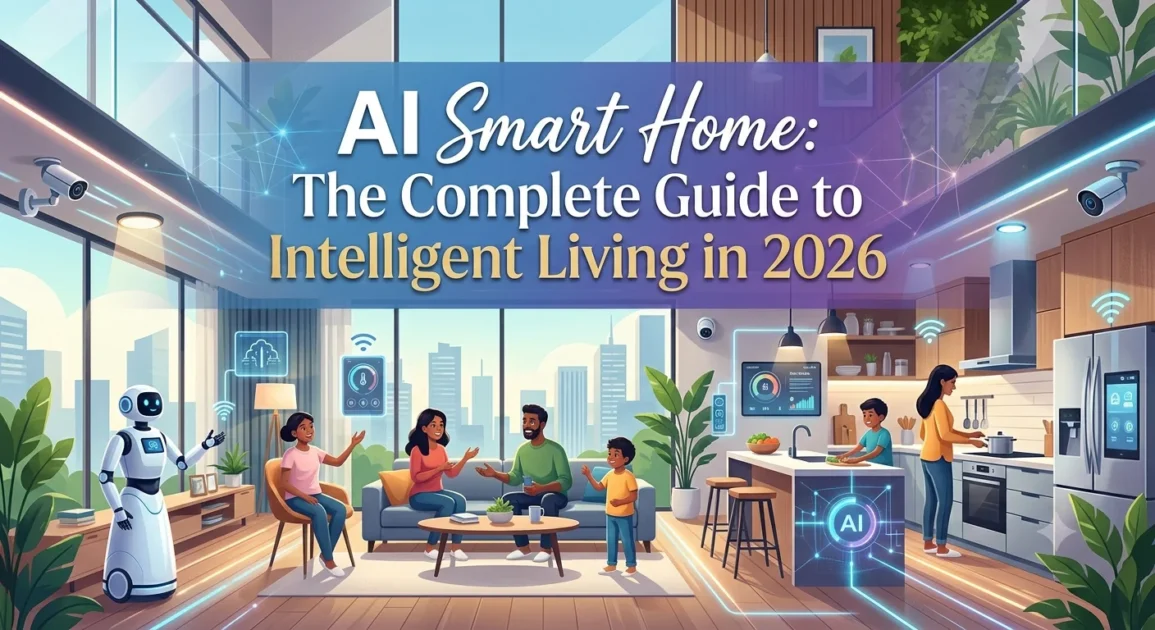
An AI Smart Home is changing how people live by making everyday tasks easier, safer, and more efficient. Instead of relying on manual controls, modern homes use Artificial Intelligence Home systems to learn your habits and respond automatically. From adjusting room temperatures to managing security and lighting, intelligent technology creates a personalized living experience. Today, many homeowners in the United States are investing in Smart Home Automation because it improves comfort while reducing energy costs. Connected Smart Home Devices work together through a Home Automation System, allowing your home to make smart decisions without constant input. As technology continues to evolve, an AI Smart Home is becoming the foundation of modern, intelligent living.
1. What Is an AI Smart Home?
An AI Smart Home is a home that uses artificial intelligence to understand your daily habits, make intelligent decisions, and automate routine tasks. Instead of waiting for commands, the system learns how you live and adjusts your environment automatically. This creates a home that feels more responsive, personalized, and efficient.
Traditional smart homes rely on simple rules. For example, you may schedule lights to turn on at 7:00 PM every day. An AI Smart Home goes much further. It notices when you usually arrive home, checks whether anyone is inside, monitors outdoor lighting, and turns the lights on only when needed. This ability to learn and improve is what separates artificial intelligence from basic automation.
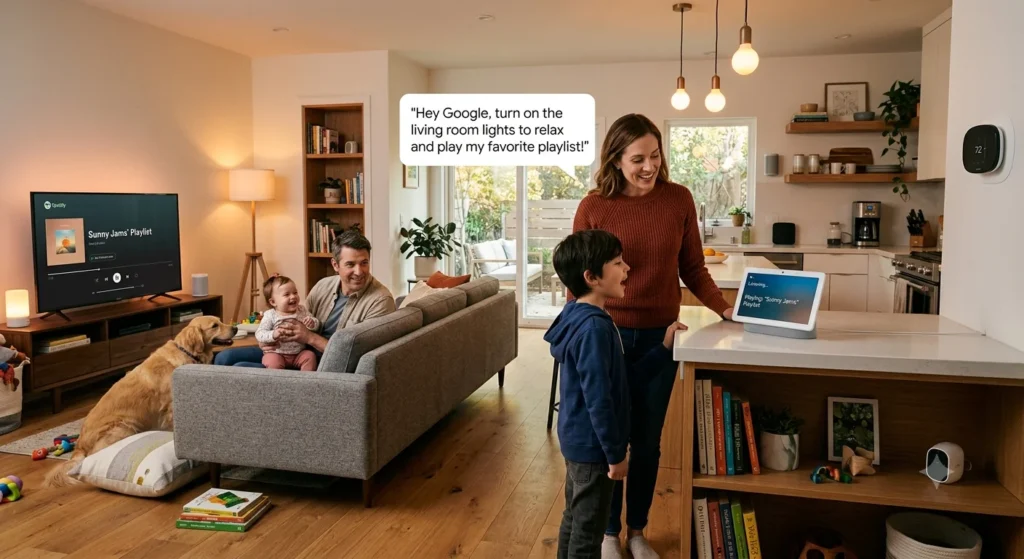
An Artificial Intelligence Home combines several technologies that work together. These include machine learning, connected devices, cloud services, and intelligent sensors. Every device collects information and shares it through a Home Automation System. Over time, the software recognizes patterns and improves its performance without requiring manual adjustments.
For example, imagine you leave for work every weekday at 8:00 AM. After observing this routine for several weeks, your AI Smart Home automatically locks the doors, lowers the thermostat, turns off unnecessary lights, activates the Smart Security System, and switches energy-saving mode on. When you return home, the system prepares your house before you even arrive.
This intelligent approach saves time while making daily life much more comfortable.
Traditional Smart Home vs AI Smart Home
| Feature | Traditional Smart Home | AI Smart Home |
| Automation | Rule-based | Learns automatically |
| Personalization | Limited | Highly personalized |
| Decision Making | Manual schedules | AI predictions |
| Energy Savings | Basic | Advanced AI Energy Management |
| Security | Motion alerts | Intelligent AI Camera analysis |
| User Experience | Reactive | Predictive and adaptive |
The biggest advantage of an AI Smart Home is its ability to improve over time. Every interaction teaches the system something new. The more data it collects, the better it understands your preferences.
Another important feature is Predictive Automation. Instead of reacting after something happens, the system predicts future actions. For example, if rain is expected during the afternoon, your smart blinds may close automatically to protect furniture from direct sunlight while reducing indoor heat.
Today’s Smart Home Devices also communicate with each other. Your Voice Assistant can tell the thermostat to lower the temperature while your Smart Lighting creates a relaxing evening atmosphere. Meanwhile, your Smart Kitchen appliances prepare dinner according to your schedule. Even your Smart Bathroom can warm the floor before your morning shower.
Many homeowners also appreciate the accessibility benefits. Older adults and people with disabilities can control almost every household function using voice commands. This makes an AI Smart Home not only convenient but also inclusive.
Experts expect intelligent homes to become standard in new construction across the United States during the coming years. As artificial intelligence becomes more advanced, homes will continue becoming safer, more efficient, and easier to manage.
“The smartest home is not the one with the most devices. It is the one that understands the people living inside.”
2. How AI Smart Home Technology Works
An AI Smart Home works by collecting information from connected devices, analyzing that information with artificial intelligence, and making intelligent decisions in real time. Instead of waiting for instructions every day, the system studies your routines and continuously improves its performance.
At the center of every AI Smart Home is a powerful Home Automation System. This system connects all your devices into one network. Every sensor, camera, appliance, and controller shares information through a secure Smart Home Network. Artificial intelligence analyzes this information and determines the best action for each situation.
The learning process begins with machine learning algorithms. These algorithms observe your daily habits. They notice when you wake up, leave home, return from work, adjust room temperatures, or use household appliances. After collecting enough information, the system begins making accurate predictions without needing constant instructions.
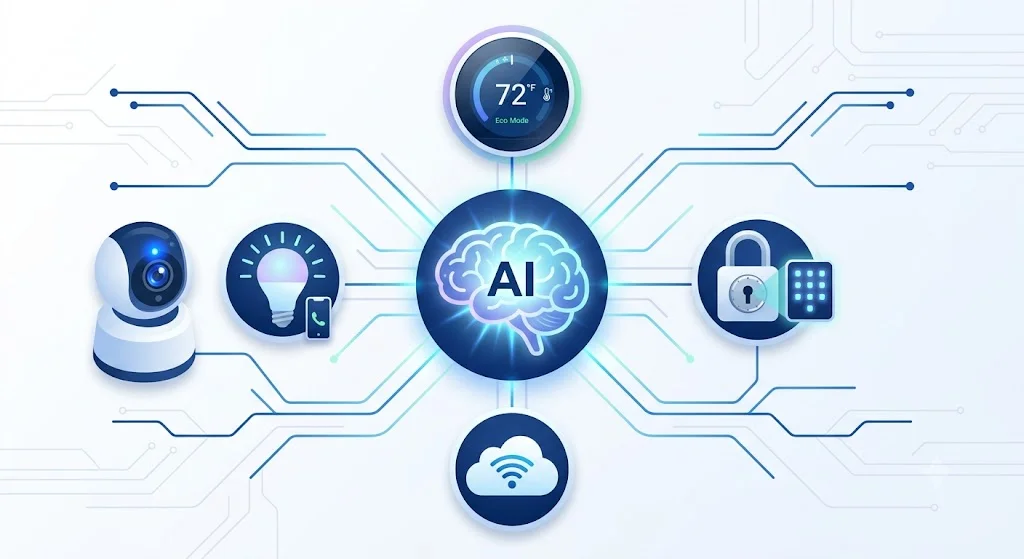
For example, if you usually watch television every Friday evening, your AI Smart Home may dim the lights, close the curtains, and adjust the room temperature before your favorite show begins.
One important technology behind modern homes is Cloud AI. Cloud servers process enormous amounts of information and allow artificial intelligence to become smarter over time. However, many manufacturers now also use Edge AI, where data is processed directly inside the home instead of sending everything to remote servers.
This method is called Local AI Processing or Local Processing. It offers faster response times and improves privacy because sensitive information stays inside your house. For example, your AI Security Cameras can recognize familiar faces locally without uploading every video recording to the cloud.
Another important part of an AI Smart Home is intelligent sensing technology.
Modern homes use several types of sensors, including PIR Motion Sensors, mmWave Presence Sensors, temperature sensors, humidity sensors, door sensors, window sensors, and air quality monitors.
Unlike older motion detectors, mmWave Presence Sensors can detect small body movements, even when someone is sitting still. This makes room occupancy detection much more accurate. As a result, lights remain on while someone quietly reads a book instead of turning off unexpectedly.
Security has also become much smarter. Modern AI Camera systems use Facial Recognition technology to distinguish between family members, visitors, delivery drivers, and unknown individuals. Instead of sending alerts for every movement, they provide intelligent notifications only when necessary.
For example, if your child arrives home from school, the camera recognizes their face and unlocks the front door automatically using connected Smart Locks. If an unknown visitor appears, your phone immediately receives a security alert.
Voice technology has advanced significantly as well. Modern AI Voice Control systems understand natural conversations instead of simple commands. They remember previous questions and understand context.
Popular ecosystems like Amazon Alexa, Apple HomeKit, Samsung SmartThings, Home Assistant, Josh.ai, Hubitat, Control4, and Crestron Home all use advanced artificial intelligence to create smooth user experiences. Each platform connects hundreds or even thousands of compatible devices into one unified system.
Communication between devices has also improved through new standards like Matter Protocol and Thread Protocol. These technologies allow products from different manufacturers to work together without complicated setup procedures.
Fast wireless networking is another essential part of every modern AI Smart Home. The introduction of Wi-Fi 7 provides faster speeds, lower latency, and stronger support for dozens of connected devices operating simultaneously.
Core Technologies Behind an AI Smart Home
| Technology | Purpose |
| Artificial Intelligence Home | Learns user habits |
| Cloud AI | Processes large amounts of data |
| Edge AI | Faster local decisions |
| Local AI Processing | Better privacy |
| Smart Hub | Connects all devices |
| Matter Protocol | Universal compatibility |
| Thread Protocol | Reliable device communication |
| Wi-Fi 7 | High-speed connectivity |
| AI Voice Control | Natural voice interaction |
| Smart Home Network | Secure communication |
Energy management has become one of the most valuable applications of artificial intelligence. Modern systems monitor electricity prices using Utility Grid Pricing and automatically schedule high-energy appliances during cheaper hours.
This intelligent scheduling is called Predictive Energy Management. It reduces monthly utility bills without affecting comfort.
Many homes now include advanced HVAC Optimization. Artificial intelligence monitors weather forecasts, indoor temperatures, occupancy, and insulation efficiency before adjusting heating or cooling systems.
Some premium homes even use Variable-Speed Heat Pumps and Thermal Battery technology to store energy during low-cost periods and use it later during expensive Time-of-Use Rates. This strategy significantly lowers annual electricity costs.
Together, these technologies transform an ordinary house into an intelligent living environment that becomes smarter every single day.
3. Key Features of AI Smart Homes in 2026
The newest AI Smart Home systems offer far more than remote control. They create personalized living experiences by combining artificial intelligence with connected technology. Every year, these features become smarter, faster, and more helpful.
One of the biggest improvements in 2026 is intelligent personalization. Instead of requiring manual settings, an AI Smart Home automatically adjusts lighting, room temperature, entertainment, and appliance behavior according to your habits. The system learns continuously and becomes more accurate over time.
Another major feature is advanced Smart Home Automation. Multiple devices work together without user intervention. For example, your home can recognize that everyone has left the house. Within seconds, the lights switch off, doors lock, security cameras activate, the thermostat enters energy-saving mode, and unnecessary appliances power down automatically.
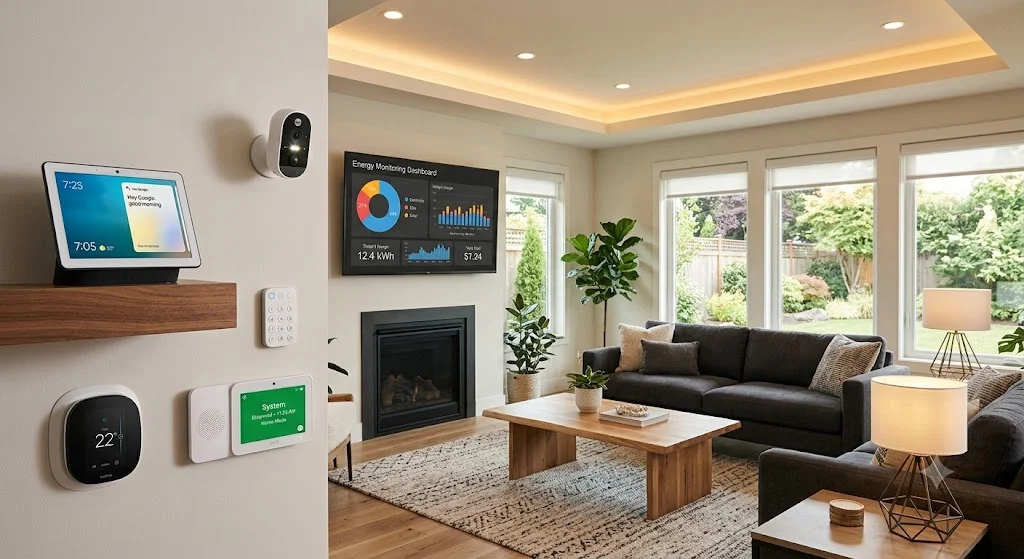
Security has also reached a completely new level. Intelligent Smart Security System technology combines AI Security Cameras, Facial Recognition, door sensors, and Presence Detection to provide accurate monitoring with fewer false alarms.
Energy efficiency continues to improve through intelligent AI Energy Management. Artificial intelligence studies weather forecasts, occupancy patterns, and electricity prices before deciding how to operate your heating and cooling systems.
Modern Smart Thermostat systems use HVAC Optimization to maintain comfortable temperatures while reducing energy consumption. They even consider local weather conditions before making adjustments.
Lighting has become more intelligent as well. Today’s Smart Lighting systems adjust brightness according to natural sunlight, occupancy, and time of day. Morning lighting gradually becomes brighter to support healthy wake-up routines, while evening lighting shifts to warmer colors that help your body prepare for sleep.
Entertainment has also evolved. Your television, speakers, streaming services, and lighting systems work together automatically. Voice commands become more conversational through advanced AI Voice Control, allowing users to interact naturally instead of memorizing specific phrases.
The Smart Kitchen has become another exciting innovation. Intelligent refrigerators monitor food inventory, suggest recipes, and remind you about expiration dates. Smart ovens adjust cooking temperatures automatically based on the meal you prepare.
Meanwhile, the Smart Bathroom improves comfort by controlling lighting, mirrors, water temperature, ventilation, and humidity. Some systems even monitor basic health indicators during daily routines.
Remote management has become easier through secure mobile applications. Whether you are at work, traveling, or visiting family, you can monitor every connected device inside your AI Smart Home.
Best AI Home Features in 2026
| Feature | Main Benefit |
| Personalized automation | Learns daily routines |
| Smart Home Automation | Hands-free living |
| AI Energy Management | Lower electricity bills |
| Smart Security System | Better home protection |
| AI Camera | Intelligent monitoring |
| Smart Thermostat | Comfortable temperatures |
| Smart Lighting | Better comfort and energy savings |
| Voice Assistant | Natural voice interaction |
| Smart Kitchen | Smarter cooking and food management |
| Smart Bathroom | Improved comfort and wellness |
The future of the AI Smart Home is no longer about adding more gadgets. Instead, it focuses on creating a home that understands your lifestyle, anticipates your needs, and quietly works in the background to make everyday life simpler, safer, and more efficient.
4. Best AI Smart Home Devices You Should Buy
Choosing the right devices is the first step toward building an AI Smart Home that truly improves your daily life. You do not need to purchase every smart gadget at once. Instead, begin with devices that solve real problems and work well together. A well-planned AI Smart Home is more useful than a house filled with disconnected products.
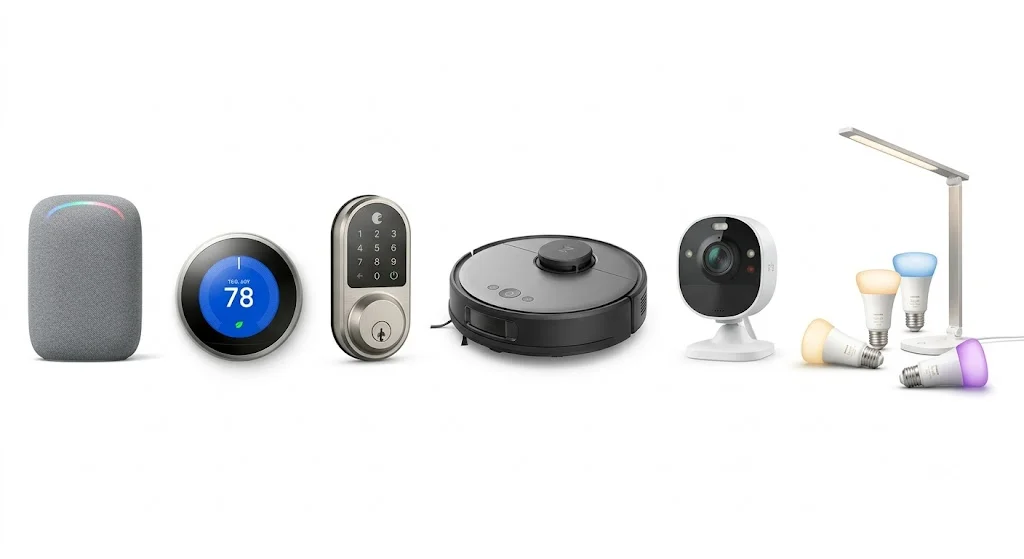
The best AI Smart Home Devices combine artificial intelligence, automation, and simple controls. They learn from your behavior and make everyday tasks easier. Most modern devices also support the Matter Protocol and Thread Protocol, allowing products from different brands to communicate without complicated setup.
The following table highlights some of the most useful devices for an AI Smart Home in 2026.
| Device | Main Purpose | Best For |
| Voice Assistant | Voice control and automation | Everyday convenience |
| Smart Thermostat | Climate control | Energy savings |
| Smart Lighting | Automatic lighting | Comfort and efficiency |
| AI Camera | Intelligent security | Home protection |
| Smart Locks | Keyless entry | Better security |
| Robot Vacuum | Automatic cleaning | Busy households |
| Smart Display | Visual home control | Family communication |
| Smart Hub | Connects devices | Central management |
| Smart Plugs | Appliance automation | Easy upgrades |
| Video Doorbell | Visitor monitoring | Front door security |
A Voice Assistant is often the center of an AI Smart Home. You can control lights, locks, music, reminders, and appliances with simple voice commands. Modern assistants understand natural conversations instead of requiring exact phrases. This makes AI Voice Control feel much more human.
The Smart Thermostat is one of the smartest investments for homeowners. It studies your daily schedule and adjusts temperatures automatically. Advanced systems use Predictive Energy Management, HVAC Optimization, and Utility Grid Pricing to lower electricity costs while maintaining comfort. Some premium models even work with Variable-Speed Heat Pumps for greater efficiency.
Security is another area where artificial intelligence shines. Modern AI Camera systems recognize familiar faces using Facial Recognition technology. Instead of sending alerts every time a tree moves in the wind, they identify real people and vehicles. Combined with PIR Motion Sensors and mmWave Presence Sensors, they provide much more accurate security monitoring.
Your Smart Locks can also work together with these cameras. For example, the front door unlocks automatically when a recognized family member arrives. If an unknown visitor approaches, your phone immediately receives a notification.
Lighting has become much more intelligent in recent years. Smart Lighting systems adjust brightness according to the time of day, room occupancy, and natural sunlight. Some homes even create personalized lighting scenes for reading, watching movies, or relaxing after work.
The Smart Kitchen is another area benefiting from artificial intelligence. Smart refrigerators monitor groceries and remind you when food expires. Smart ovens recognize recipes and automatically select the correct cooking temperature. Coffee machines prepare your favorite drink before you even enter the kitchen.
The Smart Bathroom is becoming increasingly popular as well. Intelligent mirrors display weather updates and calendars. Smart showers remember your preferred water temperature. Ventilation systems automatically adjust humidity levels after every shower.
One overlooked device is the Smart Hub. It connects all your products into one reliable Home Automation System. Instead of managing several mobile apps, you control everything from one place. This creates a smoother and more reliable AI Smart Home experience.
Before buying any device, always check whether it supports the Matter Protocol, Thread Protocol, and Wi-Fi 7. These technologies improve compatibility and help future-proof your investment.
Case Study: Building an AI Smart Home on a Budget
Building a budget-friendly AI smart home ecosystem does not require spending thousands of dollars upfront. Most homeowners achieve seamless automation by adopting a phased approach. For instance, a highly cost-effective strategy involves starting with a foundational voice assistant hub, smart lighting, and an automated thermostat. Over a six-month period, as the network stabilizes, users can gradually integrate advanced layers like AI-driven security cameras and smart locks to complete their setup without breaking the bank.
Implementing these smart home upgrades can lead to significant long-term benefits. For instance, prioritizing energy-efficient automation can help cut down electricity expenses by nearly 18% within the first year. Beyond cost savings, integrating modern, intelligent security systems provides enhanced residential safety, as AI-powered cameras detect unusual activity with far greater accuracy than traditional motion sensors. The most effective approach for any homeowner is to scale the ecosystem gradually, adding devices phase by phase rather than investing a massive budget all at once.
“Start small, choose compatible devices, and let your AI Smart Home grow with your needs.”
5. Popular AI Smart Home Ecosystems Compared
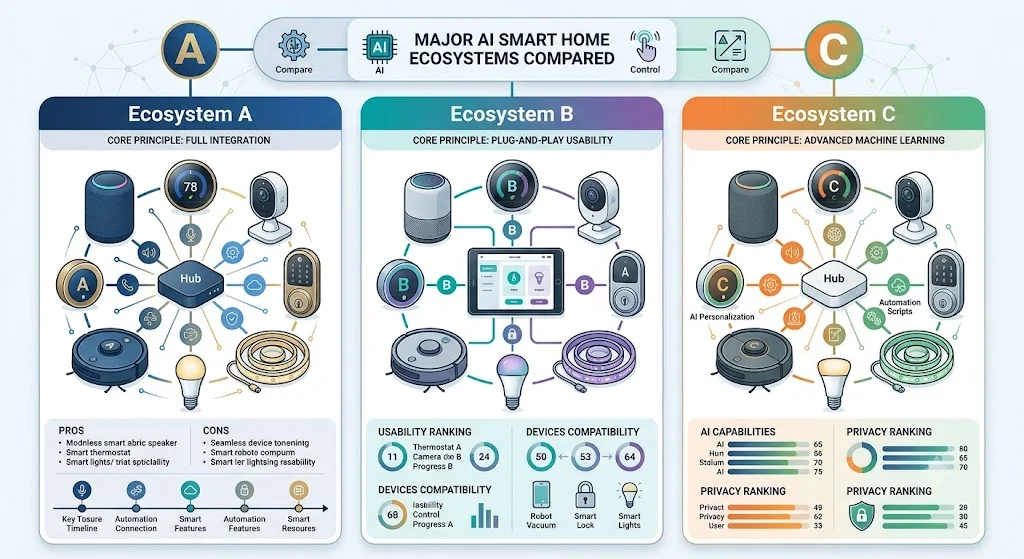
Selecting the right ecosystem is one of the most important decisions when building an AI Smart Home. Every ecosystem offers different strengths, privacy features, and automation capabilities. Your choice will determine how smoothly your Smart Home Devices work together.
The most popular ecosystems in the United States include Amazon Alexa, Apple HomeKit, Samsung SmartThings, Home Assistant, Josh.ai, Hubitat, Control4, and Crestron Home. Each platform supports different lifestyles and budgets.
Amazon Alexa remains one of the easiest platforms for beginners. It supports thousands of compatible devices and offers excellent AI Voice Control. Users can create routines, control appliances, and manage their Home Automation System using simple voice commands.
Apple HomeKit focuses heavily on privacy and security. It uses strong encryption and relies more on Local AI Processing than many competing platforms. This makes it an excellent choice for people already using Apple products.
Samsung SmartThings is known for excellent compatibility. It connects products from many manufacturers into one centralized system. It also supports the latest Matter Protocol standards, making future expansion much easier.
Home Assistant is designed for advanced users. It gives homeowners complete control over every aspect of their AI Smart Home. Since much of the automation runs locally through Edge AI, users gain faster performance and better privacy.
Josh.ai focuses on luxury smart homes. It offers highly advanced voice recognition and natural conversations while emphasizing privacy. Many high-end custom homes use Josh.ai for premium automation.
Hubitat is another excellent option for users who prefer Local Processing. Because most automation happens inside the home, internet outages have less impact on daily operation.
Premium systems like Control4 and Crestron Home are often installed by professionals. These platforms manage lighting, entertainment, climate control, security, and motorized shades through one powerful interface. They are commonly found in luxury homes across the United States.
The comparison below highlights the strengths of each ecosystem.
| Ecosystem | Best For | Main Strength |
| Amazon Alexa | Beginners | Easy setup and large device support |
| Apple HomeKit | Apple users | Privacy and security |
| Samsung SmartThings | Most homeowners | Wide compatibility |
| Home Assistant | Advanced users | Full customization |
| Josh.ai | Luxury homes | Premium voice intelligence |
| Hubitat | Privacy-focused users | Local Processing |
| Control4 | Large homes | Professional automation |
| Crestron Home | Custom installations | Enterprise-level control |
One major trend in 2026 is the growing adoption of the Matter Protocol. Previously, homeowners often struggled with devices that only worked within one ecosystem. Today, Matter Protocol helps products communicate more easily regardless of manufacturer.
Another important improvement is the use of Thread Protocol. Unlike older wireless systems, Thread creates a reliable mesh network. If one device temporarily loses connection, another device can pass the signal along. This improves reliability throughout your entire Smart Home Network.
The arrival of Wi-Fi 7 also improves ecosystem performance. Faster speeds and lower latency allow dozens of connected devices to operate simultaneously without slowing your network.
When choosing an ecosystem, think beyond today’s devices. Consider how your AI Smart Home might expand over the next five years. A flexible ecosystem makes future upgrades much easier and prevents expensive replacements later.
6. Benefits of Using an AI Smart Home
Living in an AI Smart Home offers much more than convenience. Artificial intelligence improves comfort, reduces energy waste, strengthens home security, and helps homeowners save both time and money. As the technology continues to evolve, these advantages become even more valuable.
One of the biggest benefits is automation. Instead of manually adjusting lights, locks, and temperatures throughout the day, your AI Smart Home performs these tasks automatically. The system learns your daily schedule and creates routines that require little or no effort.
Energy savings are another major advantage. Intelligent AI Energy Management analyzes electricity usage, weather conditions, occupancy, and Time-of-Use Rates to reduce unnecessary consumption. Homes using Predictive Energy Management often see noticeable reductions in monthly utility bills.
Advanced Smart Thermostat systems contribute significantly to these savings. By using HVAC Optimization, they heat and cool only occupied areas while considering outdoor temperatures and energy prices.
Security has also become far more intelligent. Modern Smart Security System solutions combine AI Security Cameras, Facial Recognition, Presence Detection, PIR Motion Sensors, and mmWave Presence Sensors to distinguish between real threats and harmless activity.
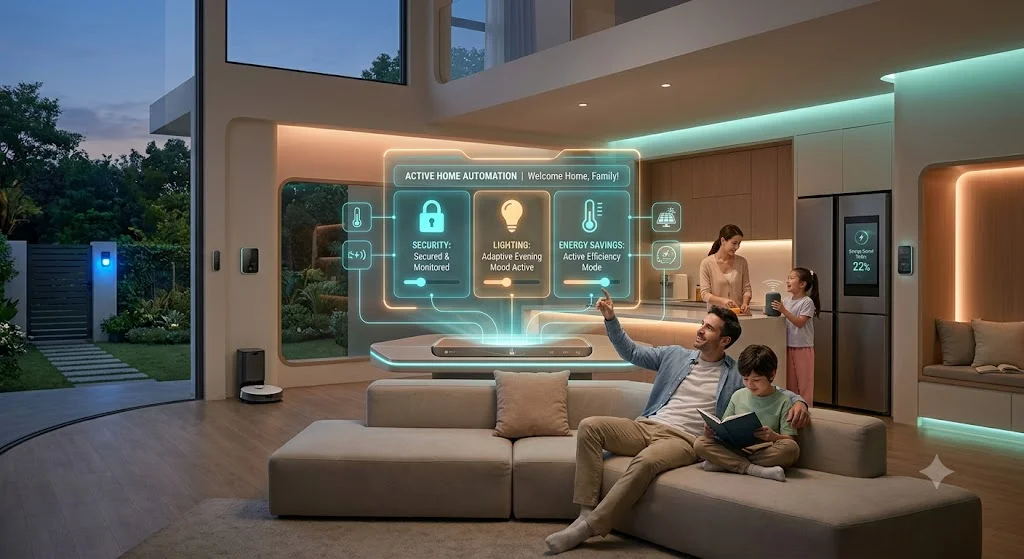
For example, instead of sending alerts every time a pet walks across the yard, the system recognizes whether a person, vehicle, or animal triggered the camera. This greatly reduces false notifications.
Convenience improves nearly every part of daily life. Your Voice Assistant can control entertainment, shopping lists, reminders, lighting, appliances, and security using natural speech. Families no longer need to search for switches or remote controls because the house responds instantly.
Accessibility is another important advantage. Older adults and people with disabilities benefit from AI Voice Control, automated doors, intelligent lighting, and remote monitoring. These features allow greater independence while increasing safety.
An AI Smart Home also improves property value. Buyers increasingly look for homes equipped with modern Smart Home Technology, connected security, efficient climate control, and intelligent automation. As smart homes become more common, these features may become standard expectations in the real estate market.
Artificial intelligence also supports healthier living. Better air quality monitoring, intelligent humidity control, sleep-friendly lighting, and automated ventilation create a more comfortable indoor environment.
The following table summarizes the biggest advantages of an AI Smart Home.
| Benefit | How It Helps |
| Greater convenience | Automates daily routines |
| Lower energy bills | Uses AI Energy Management |
| Better security | Intelligent monitoring and alerts |
| Improved comfort | Personalized automation |
| Enhanced accessibility | Easier control for everyone |
| Increased home value | Modern technology attracts buyers |
| Time savings | Less manual work |
| Better sustainability | Reduces unnecessary energy use |
Another hidden benefit is peace of mind. Whether you are traveling or simply away for work, your AI Smart Home keeps you connected. You can monitor cameras, lock doors, adjust temperatures, and receive instant alerts directly from your smartphone.
Perhaps the greatest strength of an AI Smart Home is that it continues learning. Every day it becomes more accurate, more efficient, and more personalized. Instead of forcing you to adapt to technology, artificial intelligence adapts to you. This shift transforms a house into a truly intelligent living environment that supports your lifestyle while simplifying everyday tasks.
7. Common Challenges and Privacy Concerns
An AI Smart Home offers many advantages, but it also comes with challenges that every homeowner should understand. Knowing these issues before buying devices helps you make better decisions and protect your home. The goal is not to avoid smart technology. Instead, it is to use it wisely and securely.
Privacy is one of the biggest concerns. Many Smart Home Devices collect information about your daily routine. They may record voice commands, track when you arrive home, or monitor room occupancy. This data helps improve Smart Home Automation, but it also raises questions about how companies store and use personal information.
Fortunately, many modern systems now support Local AI Processing. Instead of sending every piece of data to the internet, the information stays inside your home. This approach uses Edge AI and Local Processing to improve privacy while delivering faster performance.
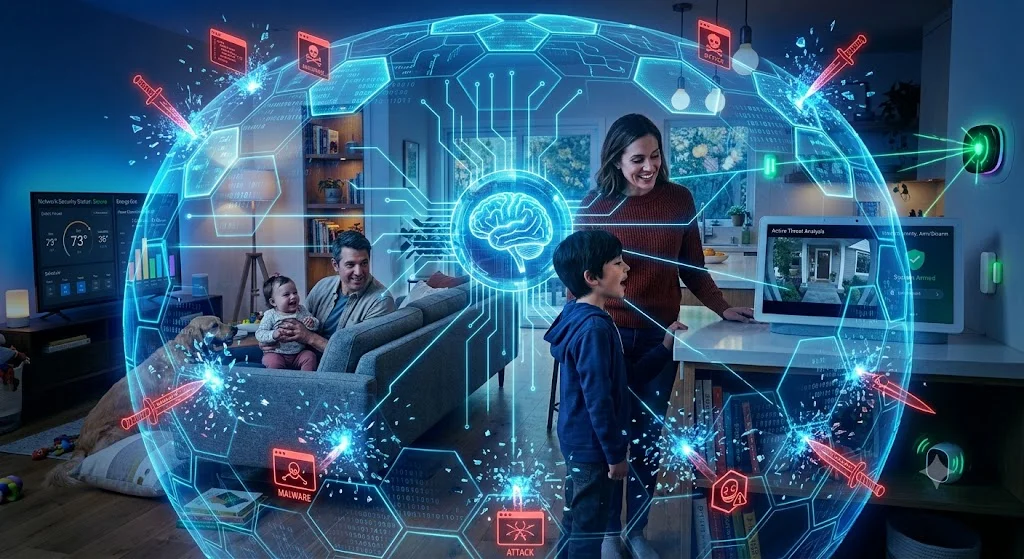
Cybersecurity is another important issue. Every connected device becomes part of your Smart Home Network. If one device has weak security, it could create a risk for the entire network. This is why experts recommend using strong passwords, enabling two-factor authentication, and installing software updates as soon as they become available.
Another challenge is compatibility. Not every product works with every ecosystem. Some devices support Amazon Alexa, while others perform better with Apple HomeKit or Samsung SmartThings. Choosing products that support the Matter Protocol reduces compatibility problems and makes future upgrades much easier.
Internet reliability also affects many smart homes. Cloud-based systems depend on a stable internet connection. If your internet service stops working, some cloud features may become unavailable. However, systems using Edge Computing and Local AI Processing continue working even during internet outages.
Cost is another consideration. A complete AI Smart Home requires an investment. Some homeowners also pay monthly subscription fees for cloud storage, professional monitoring, or premium automation features. Planning your budget before buying devices prevents unexpected expenses later.
Privacy concerns are especially important for intelligent security products. Modern AI Security Cameras use Facial Recognition and Presence Detection to identify people. While these features improve security, homeowners should carefully review privacy settings and understand where recordings are stored.
The following table summarizes the most common challenges and practical solutions.
| Challenge | Solution |
| Privacy concerns | Choose devices with Local Processing |
| Cybersecurity risks | Use strong passwords and software updates |
| Device compatibility | Buy products supporting Matter Protocol |
| Internet dependence | Prefer systems with Edge AI |
| High costs | Build your AI Smart Home gradually |
| Subscription fees | Compare long-term ownership costs |
| Complex setup | Start with beginner-friendly devices |
Security experts also recommend separating your Smart Home Network from your personal devices. Many modern routers allow you to create a dedicated network for smart products. This simple step adds another layer of protection.
Another good practice is reviewing device permissions regularly. Disable features you do not use and remove devices that are no longer connected. Keeping your system organized improves both performance and security.
Although these challenges exist, they should not discourage you from adopting an AI Smart Home. Most problems can be solved with careful planning, trusted manufacturers, and regular maintenance. As technology continues to improve, privacy protection and cybersecurity features are becoming stronger every year.
“A smart home should protect your privacy as carefully as it protects your property.”
8. How to Build an AI Smart Home Step by Step
Creating an AI Smart Home may seem complicated, but the process becomes much easier when you build it one step at a time. You do not need to purchase dozens of devices on the first day. A gradual approach saves money and allows you to learn how each product fits into your daily routine.
The first step is deciding what you want your home to do. Some people focus on security. Others want lower energy bills or greater convenience. Your goals will help you choose the right Home Automation System and avoid unnecessary purchases.
Next, choose a smart home ecosystem. Popular options include Amazon Alexa, Apple HomeKit, Samsung SmartThings, and Home Assistant. Selecting one primary platform creates a smoother experience because your Smart Home Devices can communicate more effectively.

Once you choose an ecosystem, begin with essential devices. A Voice Assistant, Smart Thermostat, and Smart Lighting provide the biggest improvements for most households. These products are affordable, easy to install, and immediately useful.
After becoming comfortable with the basics, expand your AI Smart Home by adding Smart Locks, AI Camera systems, smart plugs, video doorbells, and automated blinds. Each new device should solve a real problem rather than simply adding another gadget.
Automation is where artificial intelligence becomes truly valuable. Instead of controlling every device manually, create routines that work automatically.
For example, your morning routine might raise the blinds, turn on the lights, adjust the thermostat, read the weather forecast, and start your coffee maker. Your evening routine could lock all doors, lower the temperature, activate the Smart Security System, and dim the lights before bedtime.
As your system grows, focus on improving security. Enable automatic software updates whenever possible. Use unique passwords for every account and activate two-factor authentication. These simple habits protect your AI Smart Home against many common cyber threats.
The following table shows a simple roadmap for beginners.
| Step | Action |
| Step 1 | Define your goals |
| Step 2 | Choose an ecosystem |
| Step 3 | Buy essential Smart Home Devices |
| Step 4 | Create automation routines |
| Step 5 | Expand gradually |
| Step 6 | Improve security and privacy |
| Step 7 | Review and optimize regularly |
Many beginners make the mistake of buying products from different brands without checking compatibility. This often creates unnecessary setup problems. Choosing devices that support the Matter Protocol, Thread Protocol, and Wi-Fi 7 helps avoid these issues.
Another common mistake is ignoring future expansion. Think about how your AI Smart Home might grow over the next few years. Buying compatible products today makes upgrades much easier tomorrow.
Case Study: A Beginner’s AI Smart Home Journey
A few months into the configuration, the setup can be expanded by integrating smart locks and AI-driven cameras into the existing framework. By following this progressive deployment timeline, a complete smart home ecosystem can eventually operate seamlessly under a single centralized smart hub. Expanding the network gradually ensures that the installation process remains simple, reduces troubleshooting errors, and guarantees that every new device works smoothly with the existing infrastructure. This systematic approach proves that strategic patience and phased testing create a far more stable smart home network than purchasing all equipment simultaneously
9. AI Smart Home Costs and Budget Planning
One of the first questions homeowners ask is how much an AI Smart Home actually costs. The answer depends on your goals, the number of connected devices, and the ecosystem you choose. Fortunately, smart home technology is becoming more affordable every year.
An entry-level AI Smart Home usually starts with a Voice Assistant, Smart Lighting, a few smart plugs, and a Smart Thermostat. This setup provides meaningful automation without requiring a large investment.
A mid-range system expands into home security, intelligent climate control, entertainment, and additional automation. These homes often include AI Security Cameras, Smart Locks, video doorbells, and a central Smart Hub.
Premium smart homes include whole-house automation, professional installation, custom lighting scenes, motorized blinds, advanced audio systems, and integrated climate control. Many luxury homes use Control4, Crestron Home, or Josh.ai for complete automation.
The table below provides a general comparison.
| Setup Level | Estimated Budget (USD) | Typical Features |
| Entry Level | $300–$1,000 | Basic automation and lighting |
| Mid-Range | $1,000–$5,000 | Security, climate control, automation |
| Premium | $5,000–$20,000+ | Whole-home intelligent control |
Beyond hardware, homeowners should also consider ongoing expenses. Some manufacturers charge monthly subscription fees for cloud video storage, security monitoring, or premium automation features.
Electricity savings can offset part of these costs. Systems using Predictive Energy Management, HVAC Optimization, and Utility Grid Pricing often reduce energy consumption throughout the year. A high-quality Smart Thermostat alone may lower heating and cooling expenses by automatically adjusting temperatures when nobody is home.
Homes using Variable-Speed Heat Pumps and Thermal Battery technology can save even more by storing energy during low-cost periods and using it when electricity prices increase under Time-of-Use Rates.
Another important expense is future maintenance. Although most Smart Home Devices require little attention, batteries, sensors, and occasional replacements should be included in your long-term budget.
Fortunately, there are several ways to reduce costs. Buying compatible devices prevents expensive replacements later. Waiting for seasonal sales can also save hundreds of dollars. Most importantly, build your AI Smart Home in stages instead of trying to complete everything immediately.
Think of your smart home as a long-term investment rather than a one-time purchase. Over time, improved energy efficiency, stronger security, greater convenience, and increased property value often provide benefits that go beyond the initial cost.
“The best AI Smart Home is not the most expensive one. It is the one that matches your lifestyle, budget, and future plans.”
10. Future Trends in AI Smart Home Technology
The future of the AI Smart Home is developing faster than ever before. Artificial intelligence is becoming more advanced, and new technologies are making homes smarter, safer, and more efficient. In the coming years, an AI Smart Home will not simply respond to commands. It will understand your habits, predict your needs, and make intelligent decisions with little or no input from you.
One of the biggest trends is the rise of Predictive Automation. Instead of waiting for you to switch on lights or adjust the temperature, the system will know what you need based on your routine. For example, if you usually arrive home at 6:00 PM, your house can automatically cool the living room, unlock the front door, and turn on your favorite music before you walk inside.
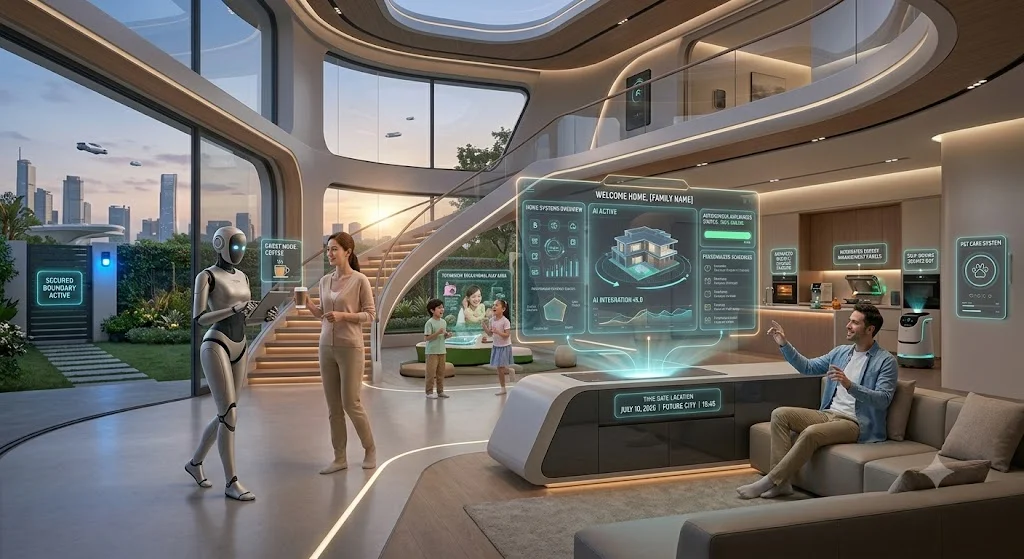
Another important trend is smarter Artificial Intelligence Home assistants. Future Voice Assistant systems will understand natural conversations much better. They will remember previous requests, recognize different family members, and provide personalized responses. Instead of giving simple commands, you will be able to speak naturally, just as you would with another person.
Energy management will continue improving through advanced AI Energy Management. Future systems will combine weather forecasts, Utility Grid Pricing, and household energy usage to reduce electricity costs automatically. Intelligent software will make decisions every minute to maximize efficiency without affecting comfort.
Many homes will also use Predictive Energy Management together with Variable-Speed Heat Pumps and Thermal Battery systems. These technologies allow homeowners to store energy when electricity prices are low and use it later during expensive Time-of-Use Rates. This approach saves money while reducing pressure on the power grid.
Artificial intelligence will also transform home security. Future AI Security Cameras will become even more accurate through advanced Facial Recognition, Presence Detection, and behavior analysis. Instead of only recognizing faces, cameras may identify unusual activity before a crime occurs.
For example, an intelligent security system may notice someone repeatedly walking around your property during the night. Rather than waiting for a break-in, the system can alert the homeowner immediately and activate outdoor lighting.
Another exciting development is Edge AI and Edge Computing. More devices will perform Local AI Processing instead of relying entirely on Cloud AI. This improves privacy because sensitive information remains inside the home. It also provides faster responses and continues working even when the internet connection is unavailable.
Healthcare will become another major part of the AI Smart Home. Future Smart Bathroom systems may monitor hydration, weight, and heart rate during every day routines. Smart mirrors could detect changes in skin condition, while intelligent sensors monitor sleep quality and indoor air quality.
The Smart Kitchen will also become more intelligent. Refrigerators may automatically create shopping lists based on your eating habits. Ovens could recognize ingredients using cameras and recommend healthy recipes without any manual input.
Connectivity will improve as Matter Protocol, Thread Protocol, and Wi-Fi 7 become standard across the industry. These technologies will allow nearly every Smart Home Device to communicate smoothly regardless of the manufacturer.
The following table highlights the major trends expected to shape the future of the AI Smart Home.
| Future Trend | Expected Benefit |
| Predictive Automation | More personalized automation |
| Smarter Voice Assistant | Natural conversations |
| AI Energy Management | Lower electricity costs |
| Edge AI | Faster responses and better privacy |
| Local AI Processing | Reduced cloud dependence |
| Advanced AI Security Cameras | More accurate home protection |
| Matter Protocol | Better device compatibility |
| Wi-Fi 7 | Faster and more reliable connections |
| Intelligent Smart Kitchen | Easier meal planning |
| Connected Smart Bathroom | Improved health monitoring |
Experts believe that future homes will focus less on adding more devices and more on making those devices work together intelligently. Instead of controlling technology, homeowners will simply enjoy a living space that understands their lifestyle.
“The future AI Smart Home will not just be connected. It will be intelligent enough to think ahead.”
11. Final Thoughts
The AI Smart Home has moved beyond being a luxury for technology enthusiasts. In 2026, it has become a practical solution for homeowners who want greater comfort, stronger security, improved energy efficiency, and a simpler daily routine. Thanks to rapid advances in Smart Home Technology, intelligent living is now available to people with different budgets and lifestyles.
Throughout this guide, you learned how an AI Smart Home works, explored the latest AI Home Features, compared leading ecosystems, discovered the best AI Smart Home Devices, and understood the importance of privacy and cybersecurity. You also saw how Smart Home Automation, AI Energy Management, Smart Security System, Edge AI, and Local AI Processing are transforming modern homes.
Building an AI Smart Home does not require purchasing every device immediately. The smartest approach is to begin with the essentials. A Voice Assistant, Smart Thermostat, Smart Lighting, and a few Smart Home Devices provide an excellent starting point. As your needs change, you can gradually expand your Home Automation System with additional products.
Compatibility is another key factor for long-term success. Choosing devices that support Matter Protocol, Thread Protocol, and Wi-Fi 7 ensures that your investment remains useful for years to come. Likewise, selecting a reliable ecosystem such as Amazon Alexa, Apple HomeKit, Samsung SmartThings, or Home Assistant creates a strong foundation for future upgrades.
The future of the AI Smart Home is incredibly promising. Artificial intelligence will continue making homes more efficient, more personalized, and more secure. As technology evolves, homeowners will spend less time managing devices and more time enjoying the benefits of intelligent living.
If you are considering upgrading your home, there has never been a better time to start. Begin with a few carefully chosen devices, learn how they work together, and expand your system as your confidence grows. A well-planned AI Smart Home is not just about convenience. It is an investment in comfort, safety, energy savings, and the future of your home.
Frequently Asked Questions
What should I consider before buying a smart home system?
Choose a system that fits your budget, supports your devices, offers strong security, and works with your preferred ecosystem, such as Amazon Alexa or Apple HomeKit.
What are common problems with smart homes?
Common issues include internet dependency, device compatibility problems, privacy concerns, cybersecurity risks, and occasional software updates.
What is the best smart home AI?
There is no single best option. Amazon Alexa, Apple HomeKit, Google Home, and Home Assistant are among the most popular AI smart home platforms, depending on your needs.
What is the home automation trend in 2026?
In 2026, home automation focuses on AI-powered personalization, Predictive Automation, Edge AI, energy optimization, and better device compatibility through the Matter Protocol.
What are the disadvantages of smart homes?
Smart homes can have higher upfront costs, rely on stable internet connections, and raise privacy and cybersecurity concerns if they are not properly secured.