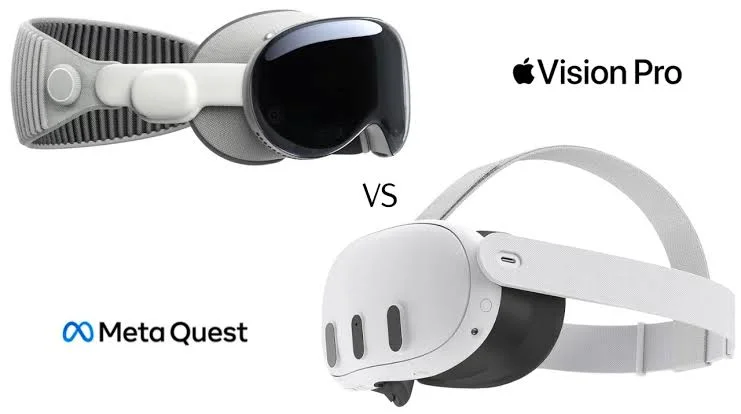
Apple Vision Pro 2 vs. Meta Quest 4: Which VR Headset Wins in 2026?

Apple Vision Pro 2 vs. Meta Quest 4

Introduction

As we enter 2026, the world of mixed reality looks quite different from what it was just a few years ago. Long before the onset of this digital revolution, even Apple Vision Pro 2 itself, a device that can overlap physical and virtual worlds with surgical precision has come on top. Drawing off a first generation that established the new paradigm, this latest execution refines for supple ergonomics and impossibly powerful processor cores, aiming to replace traditional desktop arrangement for makers, designers, and engineers who demand uninterrupted high-fidelity experience.

On the flip side of the arena, Meta countered with the Quest 4, doubling down on its mission to bring immersive technology into every household. In terms of positioning the Apple Vision Pro 2 as a luxury productivity tool, Meta intends to build out the social fabric of the metaverse and affordable gaming experiences. This year’s matchup isn’t solely a contest of specifications; it is a clash of philosophies. We’ll dissect the hardware, the software ecosystems in that time frame and the all-important value proposition to see which headset dominates 2026.

The Simple Vision — Spatial Computing 3D vs. The Metaverse

Before diving into the specs, it’s crucial to understand how these two giants’ philosophies regarding virtual reality are fundamentally different. Though similar in appearance, the Apple Vision Pro 2 and Meta Quest 4 are designed for completely different experiences. Apple is treating the headset as a premium computer that you wear on your head, while Meta sees its hardware as an access point to a digital social universe.

H3: Apple Vision Pro 2: Your Eyes’ Laptop

“Spatial Computing” is the philosophy behind Apple Vision Pro 2. Apple isn’t trying to transport you into another world; it’s trying to meld your digital experiences with your actual room. The Apple Vision Pro 2 continues this trend, emphasizing productivity, high-fidelity entertainment and cohesion within the broader Apple ecosystem.

Edit 8K video on a gargantuan virtual screen or sync your MacBook Pro with one quick glance, the Apple Vision Pro 2 performs like a pro workstation. It aims to target users who would rather replace their multi-monitor workspace with a single elegant piece of hardware, while delivering the clearest and most realistic passthrough technology available on a wearable in 2026.

Have the BEST SQUAD in Meta Quest 4, The Ultimate Social & Gaming Hub

Meanwhile, Meta remains at the forefront of social interaction, fitness and an unrivalled library of VR games. The Quest 4 rests on the promise of the “Metaverse” — a destination where you go to socialize with friends, attend virtual concerts and get lost in immersive gaming.

Whereas Apple Vision Pro 2 is all about multiyear devices for the individual productivity, Meta’s coordinate community. The Quest 4 is the lighter and more agile headset, making it best suited for active movement — whether you are jumping out of the way of bullets in an action game or following a high-intensity workout coach at your virtual gym. It’s a playful, connective, accessible device — a continued stranglehold on the social end of mixed reality from Meta.

Apple Vision Pro 2 vs. Meta Quest 4

Technical Specifications: 2026 Standards

“Good enough” specs are over by 2026. Users now expect zero-latency tracking and visuals that are closer to real life. Apple Vision Pro 2 paired with Meta Quest 4 showcases the pinnacle of mobile computing, yet both exhibits their fierceness on distinct hardware fabrications.

Visual Clarity: Micro-OLED vs. Next-Gen LCD

This is where the Apple Vision Pro 2 earns its premium designation. It has a state-of-the-art Dual Micro-OLED display system which produces 8K resolution for each eye. And in 2026, this sets the new gold standard of visual fidelity with pixel density dense enough that text looks better than printed books and movies more vivid than a top-tier cinema screen.

The Apple Vision Pro 2 has the overall high ground when it comes to raw resolution, but the optics update in Meta’s Quest 4 have done a lot to close that gap. With a “Next-Gen LCD” that features innovative polarization and dozens of local-dimming zones, Meta says it’s been able to attain deep black levels and bright colors previously reserved for OLED. It doesn’t have the “retina-level” precision of the Apple Vision Pro 2, but it isn’t far behind — perfectly crisp for high-octane gaming and social browsing.

Processing Power: M3 or R2 Silicon vs. Qualcomm Snapdragon XR3

Critical 2026 apps—like real-time 3D object rendering and AI-driven environment mapping—eat horsepower. The Apple Vision Pro 2 builds on a pair of custom silicon chips: the M3 chip, which handles more heavy computational tasks, and the R2 chip, which is solely responsible for processing data from its sensors. This is meant to enable the Apple Vision Pro 2 to be as close to zero “motion-to-photon” latency as possible and avoid the motion sickness that comes along with older VR tech.

The Meta Quest 4, however, features a powerhouse chip made for mobile XR: the Snapdragon XR3. Apple Vision Pro 2 is designed for rocket-powered thermal ceilings, meaning it can handle real professional-grade creative software without overheating; while Snapdragon XR3’s expertise is in thermal efficiency for prolonged gaming. And while it harnesses impressive raw horsepower to run massive open world games and even multi-user environments without breaking a sweat, there’s still some slight gap on the straight-up “laptop-grade” performance of the Apple silicon.

Design & Ergonomics — The Comfort Aspect

Weight and bulk were the major hurdles for headsets in their early days. These two companies have made huge leaps in wearable engineering over the course of that time period: by 2026. The Apple Vision Pro 2 and Meta Quest 4, are two mindsets on the optimal way to feel something on your face for hours on end.

Heavy components creating long-term wear and tear

The first-generation Vision Pro was widely panned for the “front-heavy” design, but has Apple cured this? With the Apple Vision Pro 2, the answer is yes emphatically. By using lightweight aerospace alloys and placing much of its internal components toward the back end of the head strap, the Apple Vision Pro 2 is far more balanced in the hand. The redesigned band, dubbed the “Solo Knit 2.0,” helps to distribute this weight better so that long pro work sessions are far easier to manage for the average user.

By comparison, the Meta Quest 4 has shifted to a so-called “wear-all-day” philosophy with its new rigid-flex strap design. One of the slimmest headsets on the market, Meta has focused on trimming the overall footprint of the device. If the Apple Vision Pro 2 feels like a piece of exquisite jewelry, the Quest 4 is much more a sport-oriented accessory. Meta’s breathable, moisture-wicking fabrics clearly make it superior for fitness-heavy users, even though Apple’s premium cushioning is better if you never move from a desk.

Controller-Less Future vs Precision Haptic

Another area where our behavior in digital space diverges is how we interact with it. Apple Vision Pro 2 focuses on a controller-free future, using only advanced eye-tracking and high-definition hand tracking. Using the Apple Vision Pro 2 is like having a superpower; you just look at an icon and pinch your fingers to select it. This “invisible” interface is ideal for productivity and browsing, since it keeps your hands free to type on a physical keyboard or sip from a cup of coffee.

But Meta sees “feeling” the virtual world as fundamental. Every Quest 4 package includes improved Touch Pro controllers featuring accurate haptics and spatial vibration. Although the Apple Vision Pro 2 provides a more organic “computing” experience, the Quest 4 delivers tactile feedback required for competitive gaming and three-dimensional sculpting. For users in 2026, the question is whether they prefer the magical, hands-free elegance of Apple Vision Pro 2 or the precise physical feedback of Meta’s controllers.

Apple Vision Pro 2 vs Meta Quest 4

Ecosystem and Software Support

A headset is only as effective as the software it runs. It’s 2026, and the war for “Ultimate VR OS” is at a climax as Apple and Meta present two radically different spaces for users to call home. Whereas the Apple Vision Pro 2 builds a sophisticated, cohesive workspace, Meta has created an open expanse where creators and gamers can run wild.

visionOS 3: The Pinnacle of Professionalism

With the launch of visionOS 3, the Apple Vision Pro 2 has morphed from a high-end gadget into a true multi-monitor workstation. With this new software update, users are now able to cast their MacBook screen into the headset and instantly expand it into a 360-degree virtual office. The Apple Vision Pro 2 makes it possible to pin dozens of windows into your physical space with ironclad stability and they are the device of choice for data analysts, developers and creative directors.

Apart from productivity, the Apple Vision Pro 2 takes advantage of how deep the Apple ecosystem goes. Whether synchronizing your iPhone 17 “Spatial Memories” or guiding your cursor inside a window on another device (like an iPad), the Apple Vision Pro 2 combines a polished, “it just works” experience with Holland-esque integration that Meta is still struggling to copy for work use cases.

Meta Horizon OS: The Community Experience

On the flip side, Meta’s Horizon OS has become “the Android of the VR world.” Meta has created a huge, community-centric ecosystem by allowing various hardware manufacturers to support their operating system. Quest 4’s strength is the breadth of retired and available apps—from experimental indie games to massive social hubs such as Horizon Worlds and VRChat.

Whereas the Apple Vision Pro 2 is all about one tailored high-end experience, the Quest 4 delivers them in mass. Meta also has the best third-party developer support in the industry right now, which almost guarantees that a new game, fitness app or social experience will be released almost everyday. Forback users looking for a constant stream of new content and to have an active social life in 2026, the Quest 4’s software library is still the gold standard when it comes to entertainment.

Price Vs Value: The Gap Of Thousands

As of 2026, the debate rages on with respect to the huge price disparity between these devices. The Apple Vision Pro 2 and Meta Quest 4 offer progressive mixed reality for different levels of expenditure. Is the chasm between “luxury computing” and “mass-market VR” still wide enough to make that investment worthwhile?

The Luxury Purchase: Is $3,499 Worth It?

While Apple is known for its higher-priced products, they’ve never gone this high, but they do plan to keep it ultra-premium — the Apple Vision Pro 2 will start from $3,499. The price is steep, however it reflects the “bleeding-edge” tech stuffed into the frame. From the aerospace-grade aluminum and curved glass to the dual 8K Micro-OLED displays, what you are paying for is materials that Meta quite simply cannot put in a lower points price.

With the purchase of an Apple Vision Pro 2 headset, you aren’t just buying a piece of hardware; you’re purchasing a computer with enough power to replace multiple monitors and perform tasks like running a fully-fledged 4K home theater or high-definition camera. As professionals for whom time is literally money, the smooth disposition of visionOS 3 provides enough justification to make the $3,499 price tag a legitimate business expense.

The Everyman’s MR: $599 is Still the Sweet Spot

Meta, by contrast, has fully embraced the pastiche of “Everyman’s MR.” In 2026, the Quest 4 is priced very competitively at $599 and delivers about 80% of what you could find from the Apple Vision Pro 2 for just about 20% of the price. Meta counters with high-quality plastics and advanced LCDs rather than expensive glass and OLEDs.

For everyday consumers, the Quest 4 is the “sweet spot.” It has great passthrough, a huge library of games, and fantastic social features without requiring a monthly payment plan. Although the Apple Vision Pro 2 beats it on sheer specs, the Quest 4 crushes it on “value per dollar,” and so is crowned king for families, gamers and casual VR enthusiasts.

FAQs

Should you spend $3,499 for Apple’s Vision Pro 2?

If you’re a creative professional or someone who’s an executive and spends hours inside the Apple ecosystem, the Apple Vision Pro 2 is definitely worth it. Its 8K Micro-OLED displays and M5/R2 engine deliver a level of visual fidelity that no other consumer headset could hope to match in 2026. But for everyday users or gamers, the price is still difficult to justify next to more affordable options.

Will the Meta Quest 4 be able to compete with Apple’s passthrough quality?

While Meta has made huge strides with its “Super-Pancake” optics and localized dimming, it doesn’t completely match the “real-life” clarity of Apple Vision Pro 2 yet. Meta has a 144Hz refresh rate for smooth gaming, while Apple prioritizes the highest possible resolution for reading text and watching 8K movies.

From the point of view of fitness and active movement, which headsets are more famous?

The Meta Quest 4 takes the crown for fitness. Its lighter, plastic build and improved weight distribution help it fit more snugly for higher-intensity workouts. Though not as heavy as the original, Apple’s Vision Pro 2 is still meant to be used primarily while sitting down or “spatial.”

Do I need controllers for the Apple Vision Pro 2?

No, the Apple Vision Pro 2 is meant to be entirely controller-free. It uses its eye and hand-tracking sensors to navigate the UI, both of which are worlds ahead of anything anyone else has made so far. Although you could link a Bluetooth game controller to play certain games, the default experience is all hands-free.

Am I able to use the Quest 4 for work?

Yes. But in 2026, Meta’s Horizon OS has had a remarkable surge in productivity tools as well, supporting native integration with Windows 12 and Google Workspace. It might not have the Apple Vision Pro 2’s multi-monitor laptop replacement polish, but virtual meetings on it and basic office tasks are absolutely possible for a fraction of the price.

Overall Conclusion: The Best VR Headset in 2026

Judging between the Apple Vision Pro 2 and the Meta Quest 4 in 2026 is no longer simply a matter of choosing a gadget — it’s about choosing your digital life. Both devices have addressed the comfort concerns of yesteryear, but they target two very different masters. One a surgical instrument for the high-end productive, the other an access point to a global fun fair.

Get the Apple Vision Pro 2 if…

You’re a Creative Pro: If your single Workstation is made for all 8K video editing, mind-blowing 3D architectural design and high-end performance remote control work (ugh), M5-powered Apple Vision Pro 2 is the one for you.

Visual Fidelity Is Non-Negotiable: For that “IMAX at home” experience with the deepest blacks and most razor-sharp text, Apple’s Micro-OLED tech is your only option.

You Are Deep in the Apple Ecosystem: You can already be a fan of the iOS rollout for Mac and watch or even AirPods if you own an iPhone, as well as this seamlessly available “handoff” feature that makes Apple Vision Pro 2 feel like just another extension of whatever tools you already have.

Buy the Meta Quest 4 if…

You Love Gaming and Fitness: Between the lightweight headset design and laser precise haptic controllers, the Quest 4 is still the lord of active movement and immersive gaming.

You Care About Social Interaction: If you’d simply like to hang out in the Metaverse, attend virtual concerts or work with teams from around the world in Horizon Workrooms, Meta provides a livelier social community.

You Want Value for Money: The Meta Quest 4 is priced at $599, but delivers a best-in-class mixed reality experience for less than a third of the price of an Apple Vision Pro 2.

The Bottom Line

Back in 2026, Altspace was powered by the Apple Vision Pro 2 — the undisputed king of Spatial Computing. At the same time, for 90% of consumers the Meta Quest 4 is the “People’s Headset” — it’s fun, affordable and incredibly powerful.

If you can afford it and require perfection, go with Apple. For the best value, if you want to join the VR revolution without breaking your budget, Meta is our winner.

Also Read

5 Best Autonomous AI for Agencies in 2026

Introduction

The agency landscape in 2026 bears little resemblance to that of a few years ago. Old-school processes depending on manual work and primitive forms of automation are going extinct. Thus agencies will be a long way from “flying blind” when it comes to AI, particularly now that they are transitioning into the era of fully unmanned AI-based operations. Now, AI actually runs tasks and manages processes to process workflows and deliver results directly.

For agencies in need of scalability, deadlines or concerns about costs rising out of control, Autonomous AI presents an incredible opportunity. Such smarter systems are functioning as a digital workforce, that works 24/7 and do not burn out. By applying autonomous AI, agencies can boost productivity, cut costs, and even deliver better results to clients — without growing their teams in perpetuity.

In this in-depth guide, we’ll take you through the 5 best self-sufficient AI tools for agencies in 2026, what makes them special and how to use them effectively. This post will teach you how to pick the best AI tools to future-proof your agency, development shop or content studio, whether you own the business yourself or have learned (or been forced) to adapt for an AI-infused world.

What Is Autonomous AI?

Autonomous AI means AI that can plan, execute and optimise tasks on its own without active daily human guidance. Autonomous agents are able to, in contrast with existing AI tools which must constantly receive input:

Define objectives

Break goals into tasks

Execute workflows

Learn from outcomes

Improve performance over time

That’s why autonomous AI for agencies is such an extremely valuable tool in 2026 – especially if you’re running a business with several clients and complicated projects.

autonomous AI

Why Agencies Will Need AI Autonomy in 2026

Agencies are under tremendous pressure now from clients who are demanding that they do things faster, better and less expensively. Organizations of human-only teams often find it difficult to keep up with these demands at scale.

Improve and optimize management service delivery Adapting AI to operations means that agencies:

Operate 24 hours a day

Reduce dependency on large teams

Improve accuracy and consistency

Scale services globally

Second, autonomous AI enables agencies to keep pace with a rapidly changing digital economy.

1. AutoGPT Pro – Perfect For End-to-End Agency Automation

A further development is the AutoGPT Pro which is amongst the latest in AI driven autonomous systems by 2026. This is built to receive a high-level goal as input and finish it end-to-end with little human intervention.

Key Features

Goal-based task execution

Autonomous decision-making

Advanced web research

Data analysis and reporting

Workflow optimization

Best For

Digital marketing agencies

Research and analytics firms

Strategy and consulting agencies

How to Use AutoGPT Pro

Define a clear business objective

Integrate necessary resources (CRM, analytics, email)

Set performance boundaries

Review outputs and refine prompts

Autonomous AI

2. Devin AI – The Top Autonomous AI Bot For Development Agencies

Devin AI has revolutionized the way we develop software in 2026. It functions as a complete autonomous AI engineer, that can take charge over an entire development project.

Key Features

Writes clean, scalable code

Tests and debugs automatically

Deploys applications

Understands complex project requirements

Best For

Web development agencies

SaaS product teams

Tech consulting firms

How to Use Devin AI

Assign development goals

Provide repository access

Review completed code

Deploy faster than traditional workflows

3. AgentNeo – Ideal for Agency Workflow and Management

Facilitate internal processes with AgentNeo – it’s great for agencies who have dozens of teams working on as many projects.

Key Features

Automated scheduling

Operational analytics

Task prioritization

Process optimization

Best For

Operations-heavy agencies

Project management teams

Administrative workflows

How to Use AgentNeo

Integrate business tools

Define operational rules

Monitor dashboards

Optimize workflows automatically

4. Jasper AI In Motion – Ideal for Content & SEO Agencies

Autonomous Mode in Jasper has become the once and done AI content manager that manages all of your ideation to publish requirements.

Key Features

Blog and article writing

SEO optimization

Multilingual content translation

Automated publishing

Best For

Content marketing agencies

SEO service providers

Social media management firms

How to Use Jasper Autonomous Mode

Set brand voice and SEO goals

Choose content formats

Enable publishing automation

Track performance metrics

Autonomous AI

5. CrewAI – Top Multi-Agent AIFT for Mega-Agencies 2.

Because now, with CrewAI, agencies can deploy multiple AI agents, all working together like a real team of humans.

Key Features

Multi-agent collaboration

Role-based task delegation

Cross-functional workflows

Scalable automation

Best For

Large agencies

Complex, multi-service projects

Enterprise-level operations

How to Use CrewAI

Assign roles to AI agents

Define collaboration workflows

Monitor communication

Scale agency operations easily

Selecting the Ideal Standalone AI for Your Agency

What to consider when choosing the top AI-driven autonomous agencies?

Agency size

Service type

Technical expertise

Budget

Small agencies can begin with Jasper or AutoGPT Pro and larger ones make use of CrewAI or Devin AI.

Benefits of agency driven autonomous AI

Faster project delivery

Lower operational costs

Improved scalability

Consistent quality

Competitive advantage

AI becomes an imperativeNot simply a competitive advantage, autonomous AI is the key ingredient for growth in 2026.

FAQs

What is AI when it´s autonomous?

And entsi AI is the kind of technology can operate unsupervised, no humans on tap.

Is AI able to substitute agency workers?

AI assists human teams by taking on tedious and technical work, it doesn’t supplant creativity and strategy.

Is autonomous AI secure?

It is, if you wear it correctly with proper controlling of permissions and subsequent watching

Can small bureaus afford autonomous AI?

Most tools are cheaper than hiring full-time employees.

Coding skills do agencies require to utilize AI?

The vast majority of sites are easy to use and do not require any technical expertise.

Final Thoughts

The future of agencies is human plus machine. The agencies that start employing these tools in 2026 will be running faster, smarter and more lean than anyone ever thought possible. If you lead the content, development or operations efforts for your agency, independent AI for agencies is how you build a sustainable business and thrive long term.

about GdagetsRead.